
I think one of my favouritest rules of writing – which has made the most sense to me – is show don’t tell. It took me the longest time to figure out what it meant though. It is the difference between saying He was scared and His throat was parched, his armpits were soaked in sweat and his legs were shaking. It is the difference between saying She ran across the street and She weaved through the running traffic, as she tried to keep an eye on her quarry while simultaneously avoiding being hit by a car.
You have to agree, showing something adds more panache to it. It becomes more engaging and you give just that many bits of information to the reader for a richer picture. Although, sometimes I do wish that He was scared could remain He was scared.
My belief in this axiom was challenged by three books that I read between 2021 and 2022. Rainbow Rowell’s Carry On I feel is entirely a “tell” book instead of a “show” book. But it worked for her because her world was closely related to the Harry Potter world. So she was assuming that you would have read Harry Potter and if she said that Simon was in the seventh year of magical school, you would know exactly what she meant. That is not to say she has done zero world building. But it is cleverly done. The “showing” only happens when her world deviates from the Harry Potter world or when there’s a twist to the whole chosen one trope.

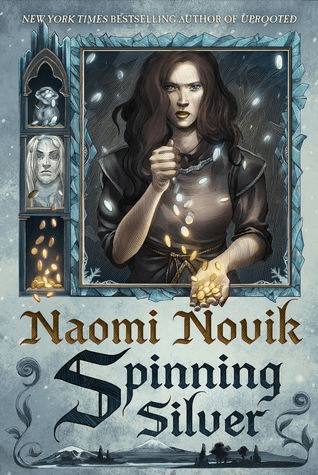
Another book I felt was a whole lot more “tell” than “show” was Naomi Novik’s Spinning Silver. Through three protagonists and their points of view, Naomi has built a tapestry that is so rich that at no point do you feel you do not understand the rules of the world or what makes the characters tick. For example, a house is described in detail by Wanda because she’s visiting it for the first time. But we visit the same house from Miryem’s perspective, and since it’s her house, it barely passes her notice.
We get pieces of information from each of the protagonists but there’s enough for us to make a full plot, all the time rooting for the characters.
A book from 2022 – Nikhil Pradhan’s Cold Truth – would also fall into the category of more “tell.” It’s an interestingly formatted book. Messages, emails, articles, etc. form the story slash plot instead of a narrative and it is quite effective in setting the lay of the land. I would have called it lazy had the detailing in the articles not been so thorough. Although the book suffers from other issues – namely how it begins with a very personal story of justice to expand into something I’m not sure what to call – the telling of it is quite compelling. And smartly enough, all the parts of a thriller that can compromise pace – explanations, encounters, deviations, etc. – are cut out from this book.

It just makes me think how rubbish these axioms really are. So many times I have found myself furiously going through rules of writings or rules to follow, etc. And almost always, they have left me scratching my head, thinking why I cannot simply do my own thing.
To combat this, I have developed a trick where when I’m plotting, I speak out loud and if I say, “I want to show them what Parth is going through” or “I’ll just tell them that this happened in the past because I don’t want to spend too much time on it” I know exactly which way to go.
Is there a writing rule you enjoy following?
Connecting this post to #BlogchatterA2Z. To read other posts, check Theme Reveal 2022: Without Prearrangement.
PS: If you like how I write and would like to read more, I have 2 ebooks on Kindle – both free if you’re on Kindle Unlimited. You can read more about the ebooks here.


 tales of Suchita
Leave a comment