
First a confession: the epiphany I had around nonfiction books at the beginning of the year has actually paid off. The realization that I was judging this entire genre on the basis of popular books that didn’t speak to me was stupid. Since then, I have read 5 nonfiction books in the past 7 months and that’s 5 more than what I have read in the previous years. So, yay me!
Onto the book I’ll not be reviewing today…I picked up Tuck de India on a whim. It has the most vibrant cover and the blurb was quite intriguing. The book is a travelogue across the Indian hinterland and the chosen mode of transportation is trucks.
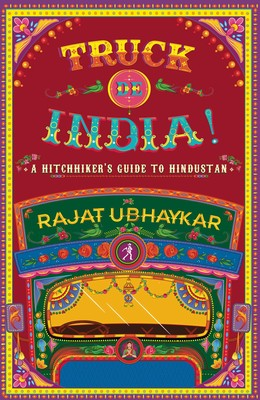
I had minimal expectations from the book. I thought it would be some interviews that the author would have done with some truckers and I’d get to read their stories. What I got instead was a journey that is filled with heart, anguish, history, catchphrases and so much warmth that I had tears in my eyes when I read the last line of the book.
The book starts with Rajat, the author, hailing a truck from Mumbai as he makes his way to Srinagar. Since I have lived in Mumbai and travelled a few national highways in Gujarat and Uttarakhand, it was a pleasure to read about his travels among these roads. It took me back to my childhood when my dad would be driving and trying to overtake trucks on the highway.
It reminded me of all the prejudice and judgment we have on truckers and their lifestyle. I could picture the overloaded sugarcane trucks, the “Horn. Ok. Please” that would intrigue me every time I would read them on the back of the trucks and the colourful way they were decorated.
The book informed me that the decoration is actually a part of the trucker’s identity, something they pay attention to when they’re getting their trucks built. Reading this book was a weird confluence of my childhood travels, stories I had heard from Richa from her time at Tata Motors building trucks and everything that India represents.
I must dedicate some space to the way the author has written this travelogue. It is presented with so much love, heart and respect that just elevated the reading experience. Yes, he has called out the misogyny, bigotry and apathy of the people he meets but it is done gently and not to judge them. After all, as they say repeatedly to him, respect doesn’t feed mouths.
It’s not just about their day-to-day life and struggles that Rajat has written about in the book. But he has also given a glimpse of his own thoughts, the history of the region he is travelling through and at one point, he even goes on a tangent to compare levying and collection of taxes and bribes in medieval India and modern India.
My favourite parts of the books were when he goes to Sirhind (a town in Punjab) to visit a workshop to see how trucks are made. And when he’s in north east. The little glimpse of the tensions in north east was educative.
The book said something that I have always known about our country: we thrive because of us, despite the systems that profess to “help” us.
Truck de India gets a Thank you for Existing rating and I hope it encourages you to pick it up because this one deserves to be read by everyone.
I would like to end with one of my favourite quotes:
In any corner of India, if you wish for tea early in the morning with every fibre of your being, you’ll always find it.
This post is part of Bookish League blog hop hosted by Bohemian Bibliophile.



 tales of Suchita
Leave a reply to sinhatarang Cancel reply