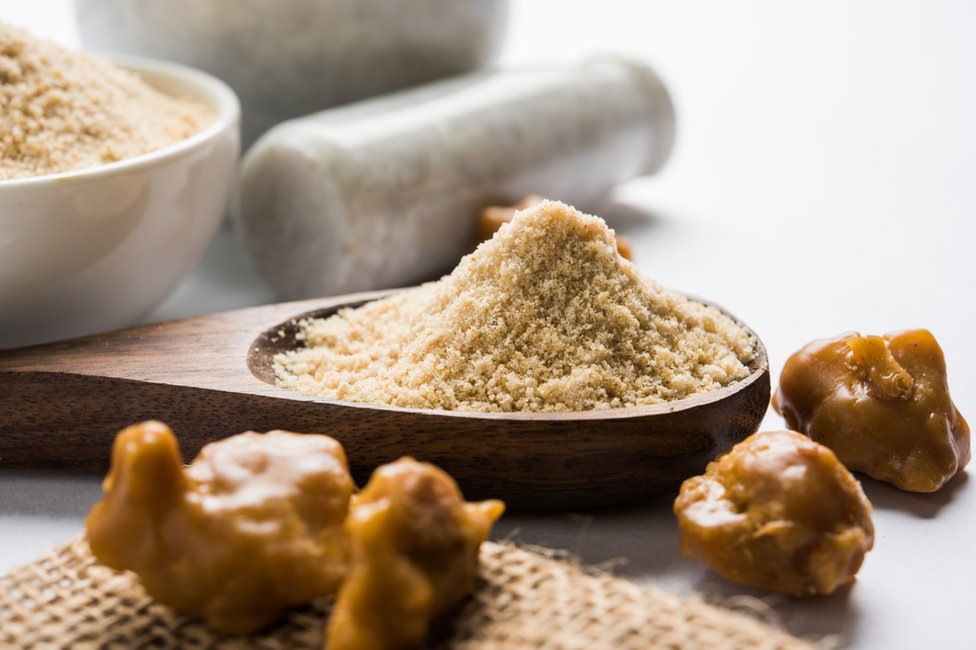
Living with a Moradabadi father and a Delhiite mother [these are important adjectives for them mind you], I have been intimately familiar with asafoetida or as we like to call it hing since I was a child. Even before I knew how hing was used to cook my favourite daal or alu ki sabji or sweet mango pickle, I knew the smell of hing. I knew putting it in my navel with a hint of water would provide relief from a gassy stomach in minutes.
One of the earliest kitchen lessons I learnt from mother, as she instructed me in the subtle art of making bhindi, was that hing doesn’t mix with ginger garlic. So you either put hing, or you put ginger garlic. The other lesson was: you should always know how to fix your cooking mistakes.

While I was Googling how to spell asafoetida correctly [thank god for copy-paste], I learnt that hing wasn’t grown in India, even though it has been used here for centuries, until 2020. The things I learn just because I’m always thinking about food!
Coming back to my story, hing is something that we have always bought from Moradabad. For as long as I can remember, hing would be bought on our second to last day in the city, wrapped up in paper, put in at least three-four bags so the smell wouldn’t permeate into the clothes. Even then, every time papa would open his suitcase, it would smell of hing. The last time hing was purchased in this way was December 2019. Since papa hasn’t managed to go back to Moradabad, it’s the one purchase that we haven’t been able to replenish.
Our stock was getting alarmingly low when mom decided to scour Amazon, looking for hing that could compete with the hing that a store in Ganj, Moradabad sold.
The frenzy of that action reminded me why hing was always bought from Moradabad and not from a more conveniently placed store. It reminded me of a time when loitering through a grocery store, picking up things, looking at their obnoxious costs and putting them down, I came across this wall where spices and teas were kept as a treat to your senses.
A woman there, quite helpfully, asked me if I’d like to smell the hing they had, freshly ground, the best I would ever have the pleasure of smelling. I smiled and pushed my nose into the huge glass jar she opened for me. It smelt like hing, sure, but not that hing. I told her, quite smugly, this isn’t the best hing. The best can only be purchased from Moradabad. She, whether good naturedly or wondering who I was, laughed and agreed.
I narrated this story to mom and swiftly the hing was ordered from the same grocery store. Needless to say, the olfactory nerves of the entire Agarwal khandaan were called on duty to sniff the store-bought hing and give judgment on how it stood next to the mitti-ki-khushboo hing. We concluded that there was definitely a gap. The taste for sure left a lot to be desired.
Mom has found another source of hing – obviously, she has become a menace with online shopping these days. It hasn’t been opened yet but the hope is it’ll maybe fall closer to mitti-ki-khushboo hing. Schrodinger’s cat and all: as long as we don’t open it, the potential of that hing is endless.
If the second hing falls short too, I’m sure amma will be more than happy with the knowledge that papa needs to visit Moradabad urgently because our household requires hing and daal ka tadka will not taste the same without this pungent spice.
PS: I have also written an ode to the roti. Do give it a read if you liked this.
This post is a part of Blogchatter Half Marathon.


 tales of Suchita
Leave a reply to soniadogra Cancel reply