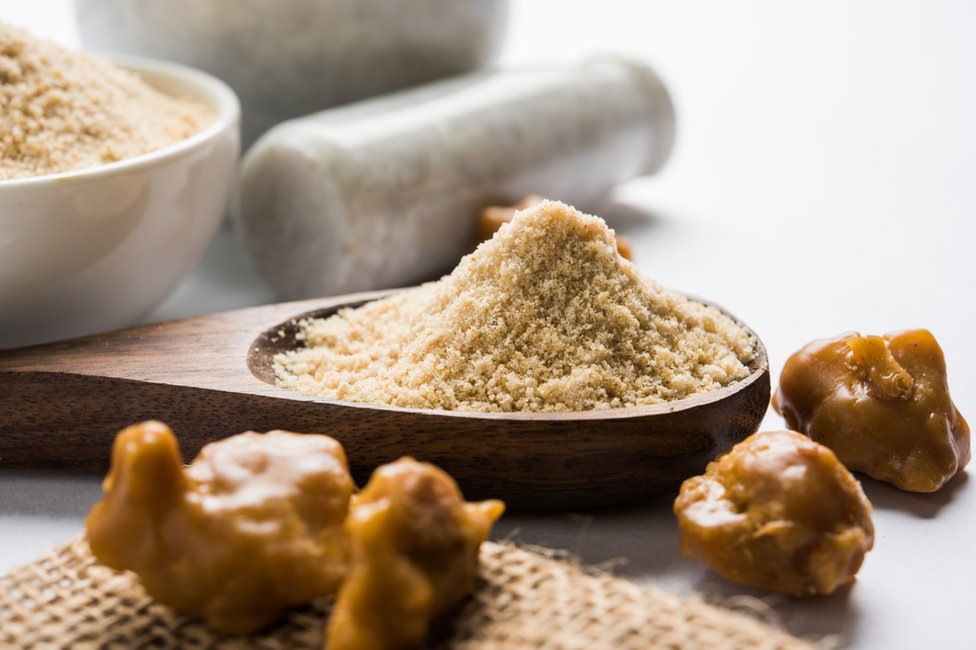
Finding asafoetida aka hing

Living with a Moradabadi father and a Delhiite mother [these are important adjectives for them mind you], I have been intimately familiar with asafoetida or as we like to call it hing since I was a child. Even before I knew how hing was used to cook my favourite daal or alu ki sabji or sweet mango pickle, I knew the smell of hing. I knew putting it in my navel with a hint of water would provide relief from a gassy stomach in minutes.

One of the earliest kitchen lessons I learnt from mother, as she instructed me in the subtle art of making bhindi, was that hing doesnโ€™t mix with ginger garlic. So you either put hing, or you put ginger garlic. The other lesson was: you should always know how to fix your cooking mistakes.
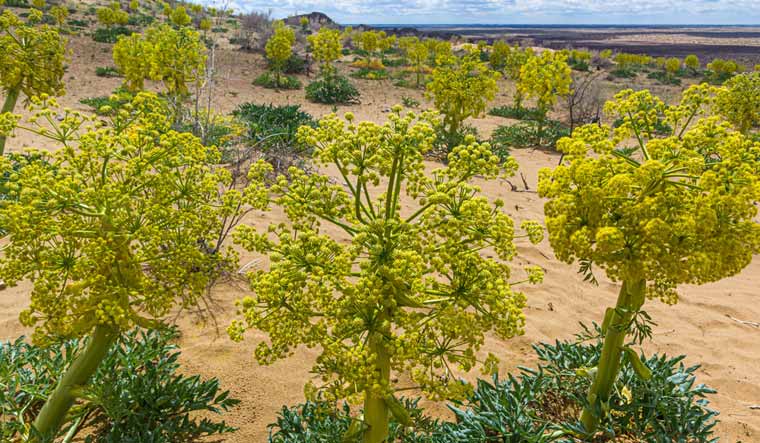
This is what a hing plant looks like. I obviously had no idea. I just thought it’s made in stores. (image source)

While I was Googling how to spell asafoetida correctly [thank god for copy-paste], I learnt that hing wasn’t grown in India, even though it has been used here for centuries, until 2020. The things I learn just because I’m always thinking about food!

Coming back to my story, hing is something that we have always bought from Moradabad. For as long as I can remember, hing would be bought on our second to last day in the city, wrapped up in paper, put in at least three-four bags so the smell wouldnโ€™t permeate into the clothes. Even then, every time papa would open his suitcase, it would smell of hing. The last time hing was purchased in this way was December 2019. Since papa hasnโ€™t managed to go back to Moradabad, itโ€™s the one purchase that we havenโ€™t been able to replenish.

Our stock was getting alarmingly low when mom decided to scour Amazon, looking for hing that could compete with the hing that a store in Ganj, Moradabad sold.

The frenzy of that action reminded me why hing was always bought from Moradabad and not from a more conveniently placed store. It reminded me of a time when loitering through a grocery store, picking up things, looking at their obnoxious costs and putting them down, I came across this wall where spices and teas were kept as a treat to your senses.

A woman there, quite helpfully, asked me if Iโ€™d like to smell the hing they had, freshly ground, the best I would ever have the pleasure of smelling. I smiled and pushed my nose into the huge glass jar she opened for me. It smelt like hing, sure, but not that hing. I told her, quite smugly, this isnโ€™t the best hing. The best can only be purchased from Moradabad. She, whether good naturedly or wondering who I was, laughed and agreed.

I narrated this story to mom and swiftly the hing was ordered from the same grocery store. Needless to say, the olfactory nerves of the entire Agarwal khandaan were called on duty to sniff the store-bought hing and give judgment on how it stood next to the mitti-ki-khushboo hing. We concluded that there was definitely a gap. The taste for sure left a lot to be desired.

Mom has found another source of hing โ€“ obviously, she has become a menace with online shopping these days. It hasnโ€™t been opened yet but the hope is itโ€™ll maybe fall closer to mitti-ki-khushboo hing. Schrodinger’s cat and all: as long as we don’t open it, the potential of that hing is endless.

If the second hing falls short too, Iโ€™m sure amma will be more than happy with the knowledge that papa needs to visit Moradabad urgently because our household requires hing and daal ka tadka will not taste the same without this pungent spice.


PS: I have also written an ode to the roti. Do give it a read if you liked this.


This post is a part of Blogchatter Half Marathon.

Header image source.

42 responses to “Finding asafoetida aka hing”

  1. I never knew that you don’t mix hing and adrak lehsun! Man, I have been cooking wrong all my life! Jeez, so much unlearning to do. And for me hing is restricted to sambars and rasams, so I rarely use it in sabzi’s etc. But I have been told by a popular food blogger I follow, that it does add a kickass flavour to food. I must try using this more.

    Liked by 1 person

    1. It does – only thing is you need to use it sparingly since it has such a strong flavour ๐Ÿ™‚

      Like

  2. Ye hing me dum hai! This was a really refreshing read of the day for me. And thanks for the enlightenment that Hing is made from some bushes/trees!

    Liked by 1 person

    1. You’re welcome and thank you!

      Like

  3. Ha! Ha! To think that one can spin a funny anecdote around something as ordinary as hing!

    Like

    1. Ho ho don’t call hing ordinary ๐Ÿ˜œ

      Liked by 1 person

      1. He! He! Sorry!

        Liked by 1 person

  4. As a Punjabi married into a Baniya household ( your parents will understand this better ๐Ÿ™‚ ) , hing entered my life only after marriage. Being from Meerut, “hadda hing” ( don’t know the English equivalent sorry) was the stuff they swore by. Though initially, I was a bit leery of its potency (its super-strong) I soon grew accustomed to it. Brought it back from India the same way you have described. Now, haven’t been to India since August 2019 and stock having long run out, I am having to make do with whatever I get in the supermarket here, and let me tell u missy…I haven’t had a decent tadka in the dall for about three months now.
    The point that I am meandering to is how close to home this post has hit….P.S. if u do find some good quality hing online, do let me know, ready to even pay international shipping for hing

    Liked by 1 person

    1. Hahahaha I know all about Baniya households. Tell me, is alu tamatar ki sabji as sacrosanct in your husband’s household as it is in mine? Daal is not the same without hing [yes I like garlic in daals but it cannot beat hing waali daal].

      Like

      1. Dinner menu is easy with Aloo tamatr ki sabji and paranthas ๐Ÿ˜‰

        Like

      2. Truer words have not been spoken!

        Like

  5. I am so much in love with hing and loved the way you have shared this!!

    Like

    1. Hing is quite the flavourful spice ๐Ÿ˜ƒ

      Like

  6. Interesting piece on Hing. I am personally not a fan of it but my nani uses it for tadka in her dal and for a moment i was transported in her kitchen.

    Like

    1. That’s so nice! Thank you Vikas.

      Like

  7. I love hing, although it is used rarely in Bengali cuisine. I think I have adapted it vegetarian dishes to mask off odour of most veggies. Didn’t know that hing doesn’t grow in India. Will check that info out. Thanks for writing, Suchita.

    Like

    1. Thank you for stopping by ๐Ÿงก

      Liked by 1 person

  8. Ooh, I remember that tip about ginger, garlic and hing not mixing. I love the smell of hing in a perfectly sautรฉed tadka. Reading this was a treat.

    Like

    1. Love that tadka smell too. Thank you Leha.

      Liked by 1 person

  9. This was such a nostalgic read. Nicely written, Suchita

    Like

    1. So glad you enjoyed reading it.

      Liked by 1 person

  10. I have always loved Schrodinger’s cat (I had to copy the word from someplace since I have forgotten how to spell anything anymore). And my family doesn’t love hing so much. I, however use it sneakily so that their tastebuds are accustomed to it ๐Ÿ˜€

    Like

    1. I know and I recently read somewhere that we have completely misinterpreted Schrodinger’s cat ๐Ÿˆ

      Like

  11. A lovely piece Sucheta๐Ÿ˜ we also use hing quite generously, in our sambhar, rasams, simplest of veggies. I didn’t realise until I read it in your post that we don’t mix hing and ginger garlic either. I just knew which dishes we put in and which we didn’t. New learning! Sadly, we do not have a special mitti ka hing.. Only the usual store bought ones. Hmmm.. You’ve definitely got me thinking about food and cooking and eating now

    Like

    1. Oh wow that’s so cool. I should totally do a post on cooking lessons from mom ๐Ÿ˜€ Thank you Namratha.

      Like

  12. A beautifully written ode to the king of spices aka Hing! I loved the way you highlighted the details about its origin. At our home too, Hing is one of the commonly used ingredients in cooking and loved by all.

    Like

    1. How cool! It’s definitely the king of spices ๐Ÿ˜‰

      Like

  13. Anjalie Sharma Avatar
    Anjalie Sharma

    Hing is intrinsic part of my childhood memories, hing water in navel is the go to remedy in my house. ๐Ÿ˜Š๐Ÿ˜Š

    Like

    1. Ha so cool! Same to same.

      Like

  14. Rishibha Agarwal Avatar
    Rishibha Agarwal

    A very interesting read.Shuchita’s narration of hunt for best quality hing reminds one of truffle hunting expedition.

    Liked by 1 person

    1. Haha thank you!

      Like

  15. I am sure, Hing is definitely the kitchen product with most “Unknown for it’s origin”. and what a story you have to go with it!!!

    Like

    1. Absolutely. Thank you ๐Ÿ™‚

      Like

  16. You made me eager for Moradabad ki hing now. ๐Ÿ˜€๐Ÿ˜€

    Like

    1. Hahahaha it’s the best hing ๐Ÿ˜€

      Like

  17. I didn’t know that hing doesn’t go with ginger-garlic, but come to think of it, some of the recipes I tried out in the last couple of years don’t use hing when they use ginger-garlic paste. Interesting, the things you learn! ๐Ÿ™‚

    Liked by 1 person

  18. Hing was an inherent part of my younger days too. Unlike you, I spent my childhood disliking it and yet strangely enough, I’ve started enjoying the flavour now. I wonder if it’s only because it’s the smell of home. I read this fabulous thread on twitter which spoke at length of it’s origin. I wish I’d saved it up. I know now I’ll spend the next hour looking for it!

    Like

    1. Oh that sounds like a really cool thread! I don’t think I ever had the choice of liking of disliking hing ๐Ÿ˜€ it just was and now when I hear my friends remember a daal they ate at my house because of the hing tadka, it blows my mind!

      Like

  19. We always crave for those few things from our hometown. Beautifully written

    Like

    1. Thank you ๐Ÿ™‚

      Like

  20. Radhika Acharya Avatar
    Radhika Acharya

    The king of a dish is the humble hing! I so agree.
    Loved this ode to the asafoetida. ๐Ÿ˜Š๐Ÿ˜Š

    Liked by 1 person

    1. Thank you Radhika ๐Ÿ™‚

      Like

Leave a reply to Vikas Nainwal Cancel reply