What makes you normal?

My sister is hearing impaired. I don’t like to talk about it because no matter how much I love her or empathize with her; I will never truly understand what it means to live in her shoes. To live with a disability where one of her senses is absent. 

The first time I understood what it truly meant to have 90db hearing loss was only two years ago. She had to go for an audiogram. In an audiogram, she has to wear headphones and the technician sends notes in different frequencies into that headphone. She has to inform the technician if she can hear the note. I was in the room with her and I could hear almost all the notes without the headphones and she could only hear a few of the high-pitched ones.

An audiogram, by design, is held in a soundproof room and once all the notes had ceased, I felt a vacuum around me, like a pressure on my ears and heart. That’s when it struck me, she lives with this kind of pressure all the time.

It is easy to pity someone who has a disability. The pity mostly rises inside us because we feel we’re normal and by our standards they are not. But what is normal? Whose definition of normal applies when my sister’s normal is having four senses instead of five?

When we came to know of her disability in 1996-1997, there weren’t a lot of resources available in India to help her. I shudder to think how my parents found the wherewithal to hunt for them. For the longest time, my mother had this huge folder of a correspondence course she did from John Tracy Clinic on helping children with hearing loss. And there was Ali Yavar Jung National Institute in Bombay where we took her initially for her speech development.

My sister doesn’t know sign language. She doesn’t wear hearing aids either. The first was a decision we made because we wanted her to develop her speaking abilities, whatever was possible. She hated her speech development lessons in any case. She fought with almost all her teachers until she found one while we were in Dehradun who she liked.

The second was her choice. The aids didn’t add anything to her life, apart from making her self-conscious. We all know how to do the alphabets in sign language though and have been using it for 26 years to communicate effectively with her. 

As humans, we tend to look at things we don’t understand, or things that we cannot map into our own lived experience with suspicion. It scares us which is why Sakshi’s blog hop for International Day of Persons with Disabilities (IDPD) is such a great platform to share stories of people living with disability and their caregivers.

There’s another reason why we (my parents and I) don’t like to talk about my sister’s disability. It is because we hear the words β€œyou’re brave” a lot and a version of β€œyou have brought her up so well, you can’t tell by looking at her that she has a disability, she looks so normal.”

Normal. There’s that word again. To this, mom usually says β€œwe didn’t raise her, she raised us.” To be fair, they probably think they’re being kind, applauding us for showing them a different story from the apathy, exclusion or pity that is shown people with disabilities within families. But what they don’t realize is how condescending it is to congratulate us for being human, caring and creating a space where she can thrive.

Because when it really comes down to it, that’s what they need. They only need a safe space to figure out life, to participate in being productive members of society and have people in their life who see the disability as part of their makeup and not the only thing that defines them.

When you look at disability from that lens – creating an ecosystem – inclusivity becomes a no brainer. Don’t we all have specific needs? Don’t we all need information provided to us a particular way so we can process it? Don’t we all have a need to have a purposeful life, however we may define it? Don’t we all sometimes need aids or tools to function to our optimum?

To me inclusivity has always been simple: an ecosystem where resources are available for anyone to realize their dreams.

How would you define inclusivity?


This post is a part of the International Day of Persons with Disability blog hop hosted by Sakshi Varma – Tripleamommy. Access all posts of #IDPD2024Bloghop here.

Header Photo by Saa R on Unsplash

42 responses to “What makes you normal?”

  1. I was looking forward to your post in the blog hop, Suchita. I knew it would be something I would nod my head in agreement to.

    I was so glad to finally meet Shreya after hearing so much about her in our calls. I’ve said this before, you and her remind me of my sister and me- the fierce bond we’ve had.

    Love the title of your post. What actually makes us normal? With our without disability I don’t consider myself normal and am fine with it. We’re all so different and it makes the world colourful.

    I hope that someday we as a society create that “ecosystem where everyone can realize their dreams.”

    Liked by 1 person

    1. Thank you so much Leha ❀ And yes, our differences make the world better!

      Like

  2. TripleAmommy Avatar
    TripleAmommy

    There is a lot that resonated with me as I read your post – most of all the title itself. When I compare my disabled child to my other two – Yes there are things he cannot do like them – but often enough his smile, his happiness are the purest. So his normal and ours may be different but not necessarily better or worse.

    Another thing you wrote about your mum’s words – in many ways Anvay is raising us too. I am a different person and I am sure so are the rest of us – we are better because of him.

    Liked by 1 person

    1. Exactly, that better or worse is something we all need to take a look at. Thank you Sakshi – we’re all better humans for knowing our humans better πŸ˜€

      Like

  3. It challenges the very notion of “normal” and beautifully emphasizes the need for inclusivity as an ecosystem where everyone can thrive. It’s a reminder that what truly matters is creating spaces where everyone’s unique abilities and needs are valued and supported.

    Liked by 1 person

    1. Thanks Jaideep πŸ™‚

      Like

  4. Thank you for sharing this thoughtful blog. To me, an inclusive society is one where everyone can live their lives with ease and dignity.

    Liked by 1 person

    1. Dignity – I love that word. It’s so important.

      Liked by 1 person

  5. i also has the experience of an audiogram where I had to take my daughter for her test. To me inclusivity is a surrounding that provides opportunity to anyone to live their life their own way

    Liked by 1 person

    1. Live their own way – that’s a good thought.

      Like

  6. Dr. Aparna Salvi Nagda Avatar
    Dr. Aparna Salvi Nagda

    Suchita, I’m hearing impaired. Lost my hearing after an accident. Being a doctor, it has impaired my practice. Your blog touched me in multiple ways.

    Like

    1. I’m glad the post resonated with your Aparna πŸ™‚

      Like

  7. mommywithagoal Avatar
    mommywithagoal

    This blog is heartfelt and thought-provoking, offering a personal glimpse into living with and supporting someone with a disability. The writer’s reflections challenge societal perceptions of “normal,” emphasizing that disability is a part of identity, not a definition.

    The audiogram anecdote vividly conveys the daily reality of living with hearing loss, fostering empathy. The critique of “brave” compliments highlights the need to move beyond condescension and focus on creating inclusive ecosystems where individuals can thrive.

    The blog is a powerful reminder that we all have unique needs and deserve spaces to live purposeful lives. It inspires a shift from sympathy to meaningful inclusivity.

    Liked by 1 person

    1. Thanks a lot πŸ™‚

      Like

  8. shlok ability Avatar
    shlok ability

    Thanks for sharing your family’s journey…I feel sibling is the most important friend a special individual can bank on through the life…

    I couldn’t agree more that special individuals need a safe space to figure out life and becoming contributing members in the society in some shape and form…

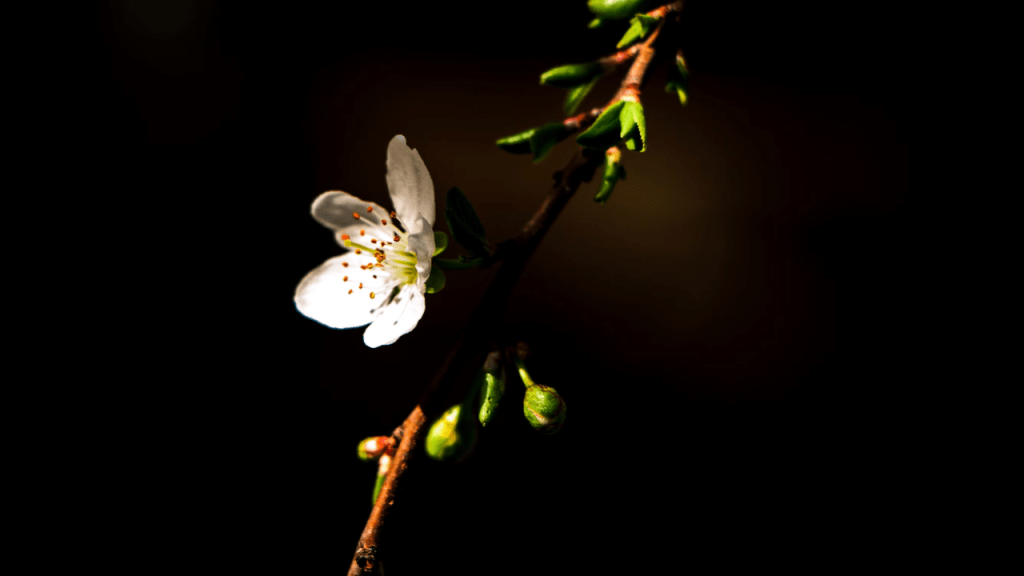
    Finally, loved the picture and question – what is normal ? :)…Nature exihibits beauty and meaning in its own unique way for every living thing..isn’t it

    Sachin Jakhotia

    https://shlokability.blogspot.com/

    Liked by 1 person

    1. Sibling as the most important friend – love that thought. We could all learn from nature – everything is as it is supposed to be in nature πŸ™‚

      Like

  9. Changes to the system start from us. Understanding is the first step. Very good post.

    Liked by 1 person

    1. Thank you πŸ™‚

      Like

  10. Inclusivity is a necessary term till we don’t need it anymore…there’s a bit of eye-opening hurt in using such a term, but the dignity of life and respect for all people is unachievable without utilizing inclusivity in our conversations and lifestyles. First use inclusivity for an everydayness…then move ahead.

    Liked by 1 person

    1. That’s very true. We need to start somewhere.

      Like

  11. joyfully2f724a0151 Avatar
    joyfully2f724a0151

    Thanks for sharing your perspective. I have a lot of friends who identify as Deaf and they have driven me to the point of no communication in social situations, insisting that I don’t take the help from an interpreter. That’s when I decided to learn Indian Sign Language which was an eye opener. I must confess I love signing, and being able to make so many more friends with hearing impairment. The best part is that my signs are not perfect, we figure out our own way on natural signing to get the context and emotions exchanged. Any invisible disability like hearing impairment is difficult to explain and often peoples’ reaction to it is from a place of ignorance. Inclusion is taking the step forward in a way or language that makes sense for the one at the receiving end, and not imposing your own ideas of normalcy or communication.

    Liked by 1 person

    1. That’s a great thought of not imposing your own ideas of communication. I’m so used to silently communicating with my sister that sometimes I struggle to communicate with words and voice πŸ˜…

      Like

  12. I deeply appreciate how this post captures the emotional journey of living with and caring for someone with a disability. The writer’s honesty and vulnerability shed light on the complexities of navigating life with a loved one who has hearing loss. I admire the focus on the importance of creating a supportive ecosystem rather than just offering pity or praise.

    To me, inclusivity means creating an environment where everyone, regardless of their abilities or challenges, has equal access, opportunities, and support to thrive and contribute. It’s about acceptance, understanding, and adapting systems to empower all individuals.

    Liked by 1 person

    1. Thanks Monidipa. That’s a good definition for inclusivity.

      Like

  13. Inclusivity means creating an ecosystem where everyone, regardless of their abilities, has access to resources, respect, and opportunities to thrive. It’s about valuing diversity and ensuring everyone feels seen and supported. The post from the heart!

    Liked by 1 person

    1. That’s so true Neerja. Thank you πŸ™‚

      Like

  14. Could relate so much to your post as I have been through the same situation nearly. My dear one has a pulmonary disability and just like you mentioned your sister living constantly on that state of pressure and vacuum, I can never probably truly empathize what it must be like to not be able to breathe properly when I myself can’t even hold it for a few seconds. I hope we can continue to do our bit to make ourselves better and the world easier for them.

    Liked by 1 person

    1. That is such a good thought Ruchira – we only need to do our bit and the rest will follow ❀

      Like

  15. For me, inclusivity means becoming still to understand the other person’s needs as well. It’s not an easy task to see the other side of the world, but I am thinking of the progress we have made. At least we have some systems in place and the society has helped some people at least with its awareness and thoughtful methods. Of course, there’s a long road to travel.

    Liked by 1 person

    1. That’s true. There are wonderful humans and organizations who are doing work to bring awareness and systemic changes.

      Liked by 1 person

  16. A very moving post, Suchita. Inclusivity for me would be a place where we don’t use the word normal/abnormal– where all are equal and are allowed to thrive in their own way. True, as you’ve mentioned, in the strictest sense, we too are abnormal in some way.

    Liked by 1 person

    1. Thanks Janaki – I hope we reach that place soon πŸ™‚

      Like

  17. Preeti Chauhan Avatar
    Preeti Chauhan

    Its true Suchita, the majority defines what is normal.But we all are normal or abnormal in some ways.I think what a person with disability wants most is feeling equal not special nor specially abled , nor pity. While on one hand we want to encourage them to overcome or accept the handicap we also need to be careful to not be pitiful or patronizing. It’s a thin line to toe.Your words were honest and relatable.

    Liked by 1 person

    1. Thank you Preeti. I think if we start seeing people as people-first, we’ll realize there is no line to toe.

      Liked by 1 person

  18. Well that was a thought provoking post. For me, inclusivity means creating a world where everyone feels seen, valued, and empowered to contribute in their unique way, without barriers or judgment.

    That said, the term ‘inclusivity’ can unintentionally highlight a divide between so-called ‘normal’ individuals and those with disabilities (which, unfortunately exists). I wish the world could be a big umbrella under which every person, regardless of ability, has the opportunity to thrive.”

    Liked by 1 person

    1. That’s true. Inclusivity inherently has a divide in it. But I’ll take the term until we don’t need it πŸ™‚

      Like

      1. Pinki Bakshi Avatar
        Pinki Bakshi

        True. Till then let the word be a reminder for the work we all have to do to make that future a reality!

        Liked by 1 person

  19. Very moving post. It provoked me to ponder on what’s considered normal. Aren’t we all abnormal in some ways? Hmm…

    Liked by 1 person

    1. Thank you πŸ™‚ That’s true – normal is a myth.

      Like

  20. […] Suchita shares her experience with her hearing-impaired sister, challenging societal notions of “normal.” She emphasizes creating inclusive spaces where disabilities are just one part of a person’s identity, highlighting the importance of empathy over pity. Read her post here. […]

    Like

  21. Your post is an absolute eye-opener about the term Normal. Perhaps most of us have been using this term, without realizing its full-pledged potential. Well, inclusivity to me is a space we jointly create to provide the right to live with dignity, irrespective of anybody’s physical or mental barriers. This is a much wider concept though.

    Liked by 1 person

    1. I like your definition of inclusivity πŸ™‚

      Like

Leave a reply to Dr. Aparna Salvi Nagda Cancel reply